Digital teaching competences in the learning process at Bluefields Indian & Caribbean University
DOI:
https://doi.org/10.5377/wani.v1i1.21779Keywords:
active learning, educational technology, pedagogical innovation, professional competence, teacherAbstract
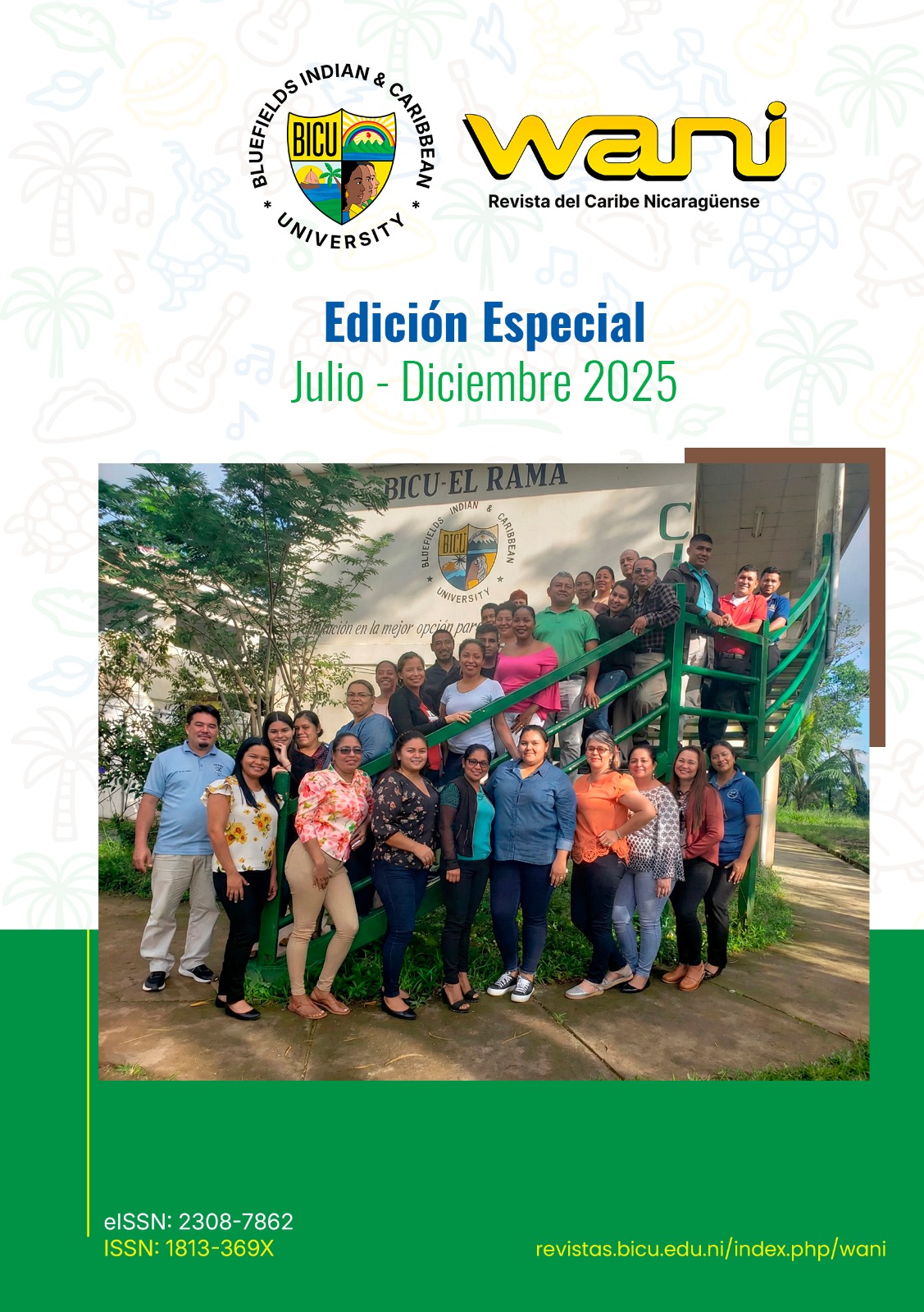
The study analyzed the digital competencies of the faculty at the Regional University Center of the Bluefields Indian & Caribbean University in El Rama city on the South Caribbean Coast of Nicaragua. The aim of the research was to identify the level of technological proficiency and the integration of digital skills into the pedagogical practice. A case study was conducted using a qualitative approach through the application of surveys to teachers, as well as implementing classroom observations to contrast self-reported perceptions with practical evidence. The results indicate that, although faculty regularly use basic digital tools such as computers, office software, and communication platforms, their usage is primarily oriented toward presentations and operational purposes. Observation confirmed that the technological integration in the classroom remains at an instrumental level, lacking activities that promote active or collaborative learning. While most teachers perceive themselves as adaptable to technological changes, this readiness is limited by poor institutional support, the absence of specialized training, and infrastructure constraints. In conclusion, the findings reveal that the faculty’s digital competencies are at an initial phase, characterized by functional, but minimally innovative use. The study recommends strengthening capacities through continuous training, sustained technical support, and the promotion of pedagogical strategies that facilitate the creative and meaningful use of technology in university teaching.
Downloads
242
References
Cela-Ranilla, J. M., & Esteve González, V., Esteve Mon, F., González Martínez, J. y Gisbert-Cervera, M. (2017). El docente en la sociedad digital: una propuesta basada en la pedagogía transformativa y en la tecnología avanzada. Profesorado Revista de currículum y formación del profesorado, 21(1), 403 - 422. https://doi.org/567/56750681020
Centeno Caamal, R. (2021). Formacion Tecnologica y Competencias digitales Docentes. Revista Tecnologica-Educativa Docentes, 11(1), 174 - 182. https://doi.org/10.37843/rted.v11i1.210
Mendoza-Mendoza, F. R., De-la-Peña-Consuegra, G. y Zambrano-Acosta, J. (2022). Las competencias digitales para mejorar estrategias de enseñanza en los docentes de Ciencias Sociales. Revista Electrónica de Ciencias de la Educación, Humanidades, Artes y Bellas Arte, 5(1), 1073 - 1001. http://dx.doi.org/10.35381/e.k.v5i1.2213
Padilla Escobedo, J. C. y Ayala Jiménez, G. G.(2022). Competencias digitales en profesores de educación superior de Iberoamérica: una revisión sistemática. RIDE Revista Iberoamericana para Investigación y Desarrollo Educativo, 12(23), 4 - 9.http://doi.org/10.23913/ride.v12i23.1096
Padilla-Hernandez, A. L., Gámiz-Sánchez, V. M.a y Romero-López, A.(2020). Evolución de la competencia digital docente del profesorado universitario; Incidentes criticos a partir de relatos de vida. EDUCAR, 56(1), 2 - 4. https://doi.org/10.5565/rev/educar.1088
Parra, K. N. (2014). El docente y el uso de la mediacion en los procesos de enseñanza y aprendizaje. Revista de Investigación, 38(83), 155 - 160. https://www.redalyc.org/articulo.oa?id=376140398009
Quiñonez Pech, S. H., Chan Chi, G. I. y Reyes Cabrera, W. R. (2021). Desarrollo de la competencia digital en profesores universitarios. Etic@net, 21(1), 83 - 110. http://doi.org/10.30827/eticanet.v21i1.16005
Rubio, N. M. (6 de Mayo de 2020). Planeacion didáctica: qué es y cómo se desarrolla en educación. Psicologia y Mente. https://psicologiaymente.com/desarrollo/planeacion-didactica
Downloads
Published
How to Cite
Issue
Section
License

This work is licensed under a Creative Commons Attribution-NonCommercial-ShareAlike 4.0 International License.


