Las disciplinas forenses y su crecimiento en Honduras
Palabras clave:
Ciencias Forenses, Tecnologias del ADN, Nanotecnologia, Inteligencia artificialResumen
Sin duda las ciencias forenses han experimentado un crecimiento sustancial en los últimos años, hemos presenciando una transición que va de una pericia sustentada de manera prioritaria en la experiencia del perito a una sustentada prioritariamente en el método científico. Asimismo, el avance significativo de diversas disciplinas que se han potencializado su aplicación en el ámbito forense, lo que ha permitido fortalecer la investigación criminal y el procesamiento de la información como:
1.-Las tecnologías del ADN con el fenotipado por ADN a través del cual se pueden inferir algunas características físicas, la ancestría, la edad; a partir de una muestra de ADN, lo que hasta hace poco no era posible con el genotipado convencional con STRs.
La genealogía genética forense que aplica la fusión de varias disciplinas científicas; fortaleciendo la investigación criminal y los procesos de identificación.
2.- El análisis digital y la inclusión de la inteligencia artificial con impresionantes aplicaciones en el campo forense, fortaleciendo el manejo y análisis de la información, la trazabilidad digital, la reconstrucción en 3D, entre otras.
3.-La nanotecnología con sus aplicaciones en la detección de huellas latentes y en la detección de residuos de venenos y otras sustancias químicas, solo por mencionar algunas.
Este avance vertiginoso que experimentan las ciencias forenses, pone de manifiesto la urgente necesidad que tenemos de seguir fortaleciendo los procesos científicos y de aplicación de la tecnología en el quehacer pericial hondureño. Hasta ahora el crecimiento pericial en nuestro país se ha enfocado en los procesos de acreditación de los laboratorios y en la certificación de los peritos, sin embargo, debemos apostar a fortalecer los procesos de formación, la investigación científica y la publicación, así como el fortalecimiento administrativo y la incorporación de la tecnología y la inteligencia artificial, entre otras.
Ante un panorama desafiante en el que el crimen ha evolucionado, adoptando tecnologías avanzadas que desafían las capacidades tradicionales. Las ciencias forenses deben ser más proactivas que reactivas; anticipándose a los movimientos de la criminalidad y de las embestidas que desde el interior se generan a fin de debilitar nuestra institucionalidad.
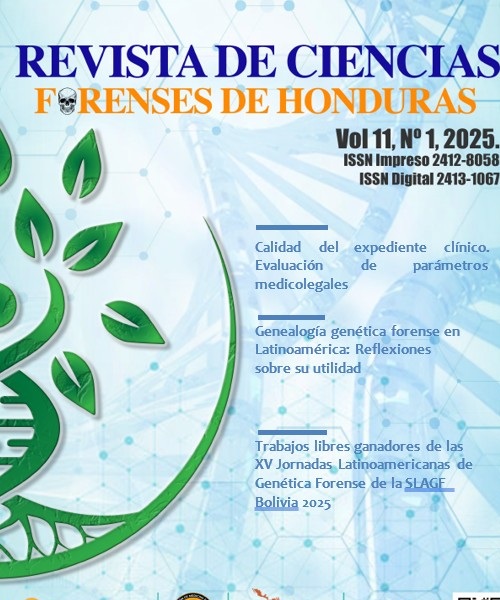
En este número de la revista publicamos una importante reflexión sobre la genealogía genética forense y sus potencialidades en Latinoamérica, la importancia del adecuado registro en el expediente clínico, así como las potencialidades de la reconstrucción cráneo-facial y el uso de dispositivos sencillos como un detector de metales manual para fortalecer la gestión de cadáveres en contexto limitados o desafiantes.
Descargas
729
HTML 22
Publicado
Cómo citar
Número
Sección
Licencia
Derechos de autor 2025 Mireya Mercedes Matamoros Zelaya

Esta obra está bajo una licencia internacional Creative Commons Atribución-NoComercial 4.0.
El autor conserva los derechos de autor bajo los terminos de una licencia CC NC 4.0