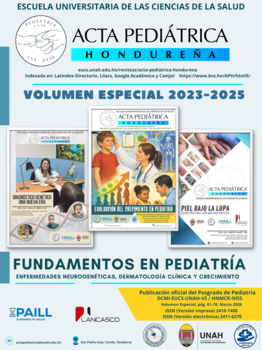
Pediatric Dermatitis: Clinical and Epidemiological Analysis of the Three Most Common Conditions in Outpatient Care
Keywords:
Atopic, Dermatitis, Diaper, Seborrheic, Pediatric, DermatologyAbstract
Background: The skin, the largest organ of the body, performs essential functions such as protection, temperature regulation, excretion, and sensory perception, making its integrity crucial for health and quality of life. Dermatitis is a common pediatric problem worldwide, with prevalence ranging from 21% to 87% in developing countries and 28% to 40% reported in Honduras.
However, clinical and epidemiological characterization of these conditions in Honduran children is limited.
Objective: To clinically and epidemiologically characterize the three most common types of dermatitis in the Pediatric Dermatology Outpatient Clinic of the Honduran Social Security Institute, Northwestern Region, from January to June 2022.
Patients and methods: A quantitative, descriptive, cross-sectional study was conducted in 150 pediatric patients (0–5 years) diagnosed with atopic dermatitis, diaper dermatitis, or seborrheic dermatitis. Sociodemographic variables, family history of atopy, triggering factors, lesion location, and treatment were collected. Data were analyzed using frequencies, measures of central tendency and dispersion, and appropriate statistical tests (chi-square and Fisher’s exact test) with SPSS v26.
Results: Male sex predominated (64%) and most patients were younger infants (61.3%). Atopic dermatitis was the most frequent (76.7%), affecting mainly the trunk and extremities; diaper dermatitis occurred in 20% and was associated with hygiene and diaper type; seborrheic dermatitis affected the scalp in 100% of cases. Topical steroids were the most commonly used treatment (93.9%). Most patients received adequate skin care, and 28% presented with concomitant conditions.
Conclusion: Atopic, diaper, and seborrheic dermatitis are the most common pediatric dermatoses in this population. Clinical and epidemiological characterization helps guide preventive and therapeutic interventions, optimizing management and quality of life. Further studies are recommended to explore associated factors and treatment effectiveness in this population.
3