Ecological Interactions and Environmental Stress Indicators Observed in the Family Zamiaceae at the Botanical Garden of the National Autonomous University of Honduras
Keywords:
zamias, camotillo, endemic, plant-animal interaction, insects, microhabitatsAbstract
In the cycad collection of the Botanical Garden of the National Autonomous University of Honduras (UNAH), 56 individuals belonging to 7 cycad species were recorded (5 of them endemic to Honduras), distributed across three genera: Dioon (Dioon mejiae), Ceratozamia (Ceratozamia hondurensis), and Zamia (Zamia furfuracea, Zamia onan-reyesii, Zamia oreillyi, Zamia sandovalii, and Zamia standleyi). Zamia onan-reyesii exhibited the highest number of interactions with invertebrates (68.8%), particularly herbivory by butterfly larvae, whereas Zamia sandovalii presented interactions without a clear pattern. Most interactions involved saprophagous insects such as Curculionidae and Labiduridae, attracted by decomposing strobilus remains. Mechanical stress caused by falling branches of Enterolobium cyclocarpum, along with light competition from certain invasive species, limits the growth of the cycads. In addition, Ceratozamia hondurensis and some strobili exhibit morphological deformities; species such as Zamia onan-reyesii show symptoms of chlorosis due to nutrient deficiency, and Dioon mejiae displays signs of fungal infection. The objective of this research was to observe, describe, and analyze the ecological interactions and signs of environmental stress present in species of the family Zamiaceae at the Botanical Garden of the National Autonomous University of Honduras, to understand the factors influencing their health status and conservation.
0
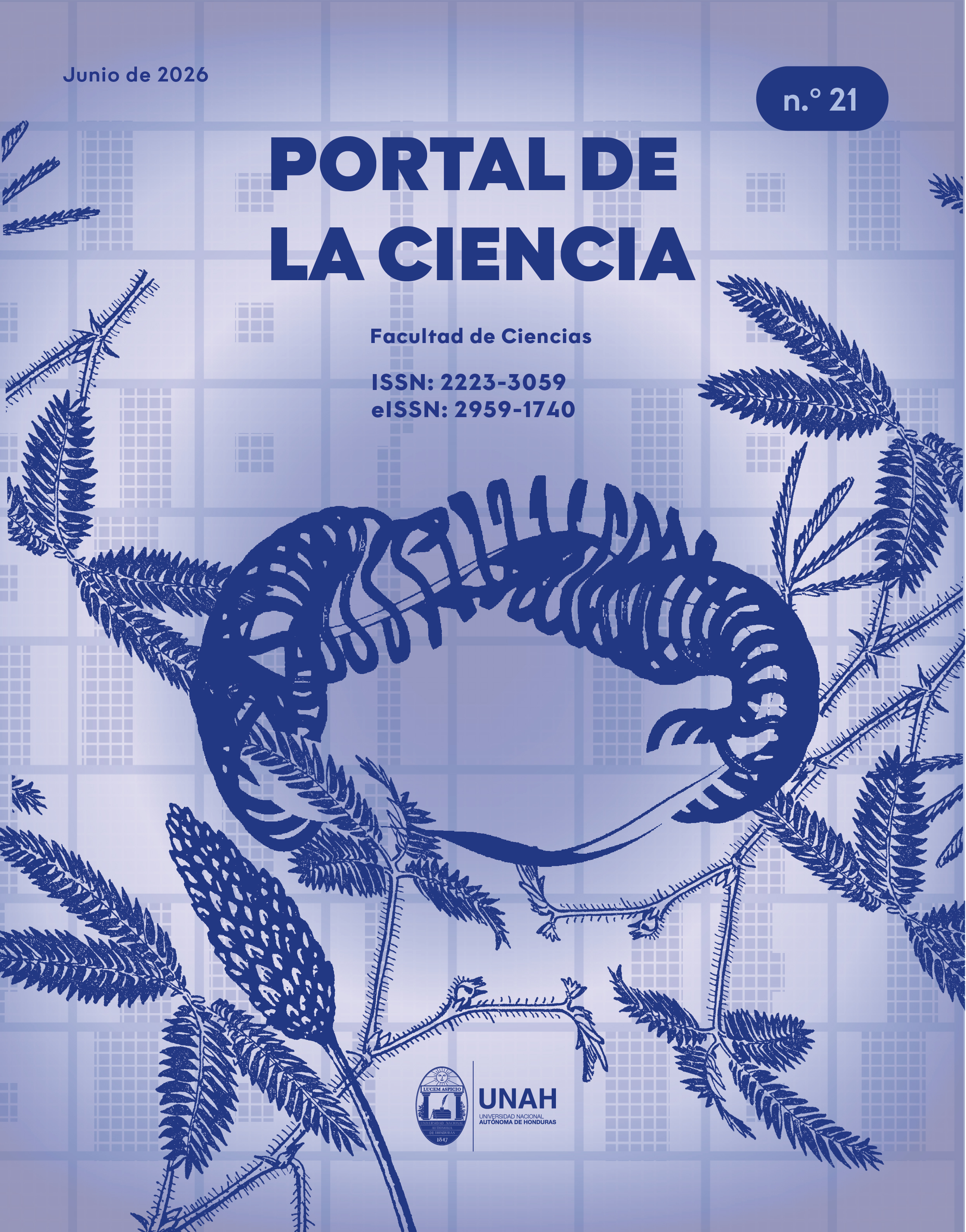
Downloads
Published
How to Cite
Issue
Section
License

This work is licensed under a Creative Commons Attribution-NonCommercial 4.0 International License.
© Revista Portal de la Ciencia
Los autores/as que publiquen en esta revista aceptan las siguientes condiciones:
De acuerdo con la legislación de derechos de autor, Revista Portal de la Ciencia, reconoce y respeta el derecho moral de los autores, así como la titularidad del derecho patrimonial, el cual será cedido a la revista para su difusión en acceso abierto en versión impresa y en formato digital. Al formar parte de múltiples indexadores, bases de datos y sistemas de referencia, los artículos que sean publicados por Revista Portal de la Ciencia se encontrarán visibles y serán descargados también de estos sitios web, indicando, en todos los casos, la autoría de los artículos, la fecha de publicación y el número de la revista al que corresponden.

Este obra está bajo una licencia de Creative Commons Reconocimiento-NoComercial 4.0 Internacional.
Usted está en libertad de:
- Compartir: copiar y redistribuir el material en cualquier medio o formato
- Adaptar: remezclar, transformar y crear a partir del material
Bajo las siguientes condiciones:
- Reconocimiento: Usted debe darle crédito a esta obra de manera adecuada, proporcionando un enlace a la licencia, e indicando si se han realizado cambios. Puede hacerlo en cualquier forma razonable, pero no de forma tal que sugiera que usted o su uso tienen el apoyo del licenciante.
- Uso no comercial: Usted no puede hacer uso del material con fines comerciales.