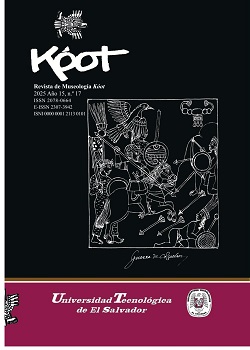
La escritura jeroglífica náhuatl en el lienzo de Tlaxcala y la conquista de El Salvador
Palabras clave:
El Salvador–Historia-Descubrimiento y conquista 1524, El Salvador–Historia-Invasión 1524, Lenguas Indígenas-Escritura, Náhuatl (Lengua Indígena)-Escritura, Jeroglíficos, Pictografía indígenaResumen
El Lienzo de Tlaxcala, es un documento pictográfico creado por los tlaxcaltecas en el siglo XVI para evidenciar su participación en las guerras de conquista realizadas a lo largo del territorio mesoamericano. Del Lienzo existen varias copias. Una de estas es el denominado Manuscrito de Glasgow, fue escrito por Diego Muñoz Camargo alrededor de 1584, es una combinación de texto alfabético en español, una serie de imágenes y escritura jeroglífica náhuatl que representan una a una las batallas que Muñoz Camargo describe. La mayor de sus particularidades, en comparación con las otras copias del Lienzo, es que reporta 11 poblaciones más en el territorio salvadoreño y otras tantas en territorio guatemalteco. Este artículo trata del camino que documentan los tlaxcaltecas en el territorio salvadoreño y el desciframiento de cada uno de sus topónimos con escritura jeroglífica. Lo novedoso del trabajo es que es poco común trabajar la escritura jeroglífica náhuatl y la versión tlaxcalteca ya que siempre se le da prioridad a la versión alfabética de los españoles.
405
Descargas
Publicado
Cómo citar
Número
Sección
Licencia
Derechos de autor 2025 Universidad Tecnológica de El Salvador

Esta obra está bajo una licencia internacional Creative Commons Atribución-NoComercial-CompartirIgual 4.0.